
Fast response for fallen trees, storm damage, and hazardous limbs - securing your property and making the area safe without delay.
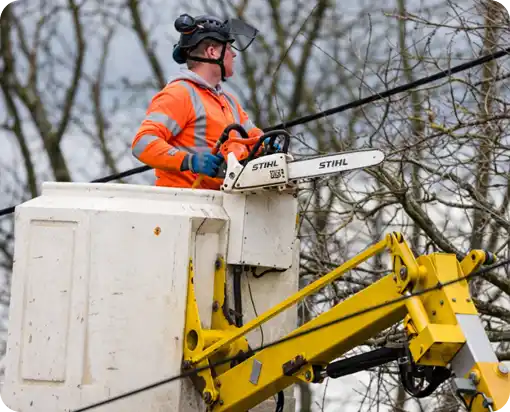
When a tree fails without warning in Bolton, you don’t have time to wait. Whether it’s Storm Arwen, Storm Ciara or Storm Eunice that’s left a tree leaning dangerously over Derby Street or Chorley Road, or sudden root failure in saturated soil beside Moses Gate Country Park, you need experienced professionals who can make it safe — properly and quickly.
Our emergency tree services in Bolton are available 24 hours a day, 365 days a year. We respond throughout Bolton, Westhoughton, Horwich, Blackrod, Little Lever, Farnworth and surrounding neighbourhoods with qualified, insured arborists using specialist equipment and industry-standard safety procedures.
We focus on one thing first: making the situation safe.
Emergency tree work is urgent arboricultural activity carried out to remove or stabilise a tree that presents an immediate risk to:
This is very different from planned pruning or scheduled tree removal. Emergency work is about real-time risk reduction and controlled stabilisation.
Common Emergency Tree Call-Outs in Bolton
Across Bolton’s mix of urban, suburban and semi-rural land — from Rivington Terraced Gardens to Queens Park — tree failure can happen suddenly, especially after prolonged rainfall followed by strong gusts.
Tree emergencies are unpredictable. Compression forces, tension loads, unstable root plates and hidden decay make cutting extremely dangerous without training and the right tools
A tree leaning at 25 degrees after high wind may still be under active load. We assess:
The root plate is the mass of roots and soil that anchors a tree.
Key factor: Soil type, root depth, moisture content, and root spread greatly affect resistance.
Wood fibers experience tension and compression forces when a tree bends.
This internal stress distribution is critical in understanding how trees resist bending forces.
When stress exceeds the structural capacity of the trunk:
Stem failure can happen without root failure if bending stress concentrates mid-stem.
A tree’s mass affects leverage and stability.
Pruning alters weight distribution and can reduce mechanical stress.
Anchoring comes from:
Strong anchor systems:
Weak anchor systems:
Incorrect cutting can trigger secondary collapse. Controlled dismantling prevents that.
If a tree is resting on a roof, conservatory or garage, removing weight too quickly can cause sudden impact and structural failure. We dismantle in sections, reducing load gradually using rigging systems, friction devices and trained climbers.
After storms, rural lanes around Middlebrook Retail Park or exposed suburban streets near Bradshaw Brow often see fallen timber. We prioritise clearance where public safety is at risk.
We provide:
This helps support storm damage insurance claims correctly and efficiently.
Call immediately if you notice:
In areas such as Horwich Road, Manchester Road, Shevington Road, and near canal towpaths, early intervention prevents escalation of risk.
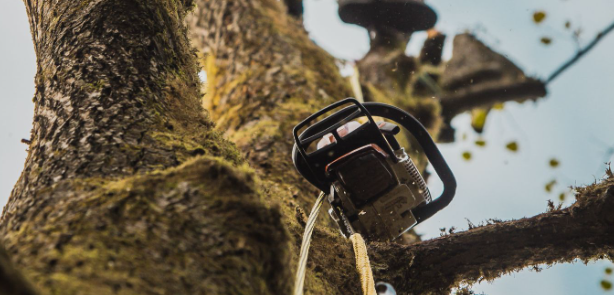
When you call, we gather key details:
This allows us to dispatch the right team and equipment first time.
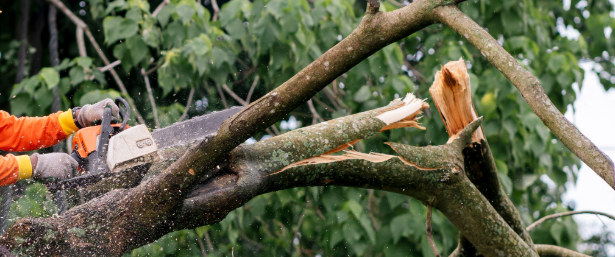
On arrival, we assess:
Emergency work requires constant reassessment throughout the job.
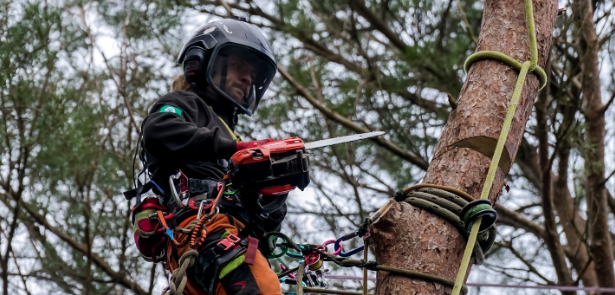
Depending on the situation, we use:
All work follows BS 3998:2010 – Recommendations for Tree Work.
In built-up areas, over 75% of emergency or hazardous tree removal jobs require sectional dismantling rather than straight felling.
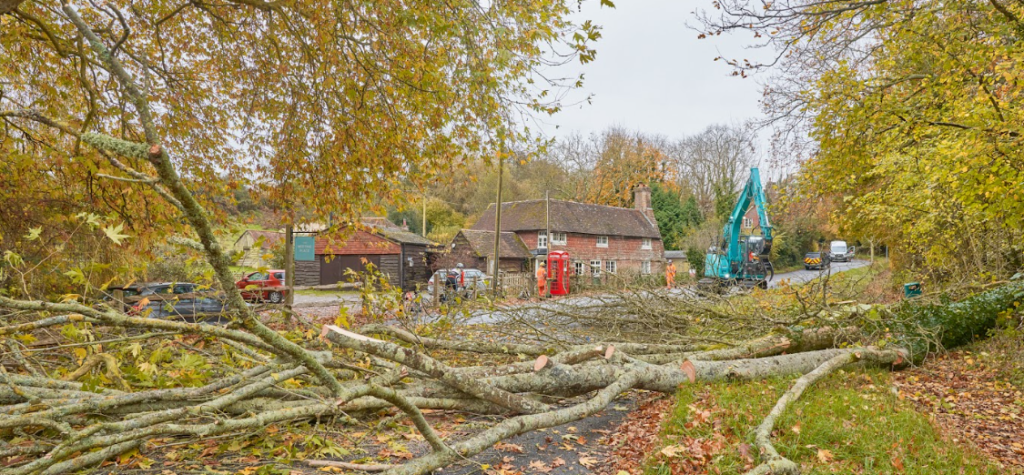
Once the tree is made safe:
Where required, we also carry out stump grinding to remove future risk.
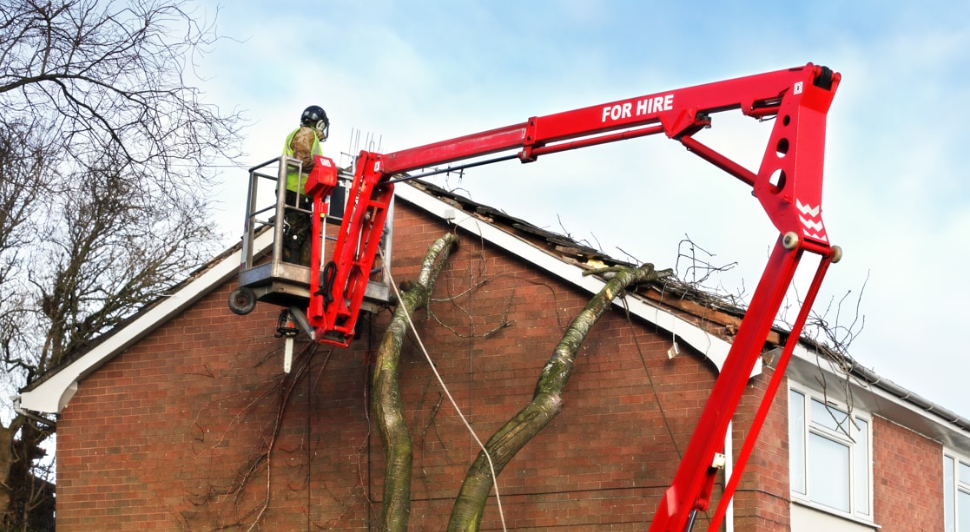
Emergency situations demand the right tools. We operate with:
All equipment is inspected in line with LOLER and PUWER regulations.
Bolton’s landscape and weather patterns present unique challenges:
Around 40% of emergency call-outs follow prolonged rainfall combined with gusting wind — saturated soil significantly reduces root grip.
Bolton’s urban and suburban canopy includes:
Understanding species-specific behaviour helps us make safer, more precise decisions.
Before:
A mature oak on Church Street developed a longitudinal crack after sustained winds from Storm Ciara, leaning toward a neighbouring garage.
Action:
MEWP access deployed due to instability. We reduced crown weight by 30%, then removed crack-affected stem sections using sectional dismantling with rigging gear.
After:
Hazard successfully neutralised within a day. Garage remained undamaged. Site cleared and made safe for residents.
Before:
After heavy rainfall and saturated ground conditions, a sycamore’s root plate lifted approximately 350mm near Bury New Road, resting across the driveway and footpath.
Action:
Rigged dismantle performed with controlled lowering and friction devices. We removed weight progressively to prevent sudden collapse.
After:
Driveway and pavement fully accessible same afternoon. Tree stump ground to below surface level. Debris removed and site left tidy.
Before:
Multiple limbs fell in play areas after Storm Eunice, posing risk to families and blocking footpaths.
Action:
Our team systematically dismantled damaged limbs using MEWP access and double rope climbing, prioritising public safety and reopening paths.
After:
Park fully reopened within 24 hours. Wood chips and debris cleared; remaining trees stabilised.
Many trees in Bolton are protected by Tree Preservation Orders (TPOs) or fall within Conservation Areas.
If a tree is protected:
• Emergency safety work may proceed under exemption
• Full documentation must be retained
• Local authority notification may be required
We manage compliance to ensure all work remains lawful and fully documented.
We operate in accordance with:
• BS 3998:2010 – Tree work recommendations
• BS 5837:2012 – Trees in relation to design, demolition & construction
• Health & Safety at Work Act
• LOLER – Lifting Operations & Lifting Equipment Regulations
• PUWER – Provision & Use of Work Equipment Regulations
• Registered waste carrier regulations
Topic | Key Legal Basis | Applies to |
|---|---|---|
Worker safety | Health & Safety at Work Act 1974 + PUWER + Work at Height Regulations | All emergency tree surgeons |
Competence standards | Lantra emergency treework NOS & BS 3998 | Industry expectation and best practice |
Tree felling consent | Forestry Act 1967 & exemptions | When and how trees can legally be felled |
Tree protection | TPOs & conservation area rules | Legal permissions even in urgent scenarios |
Emergency powers | Civil Contingencies Act 2004 | Wider emergency management context |
Emergency tree services solve immediate risks — but prevention reduces long-term issues.
We recommend:
— Annual tree inspections
— Crown thinning to reduce wind resistance (typically 15–25%)
— Early detection of disease or decay
— Root zone management and protective fencing
— Formative pruning for young trees
Properties near Moss Bank Park, Middlebrook, Deane Road and Lostock Park benefit significantly from proactive maintenance.
We aim to respond within hours wherever possible. Severe storms may increase demand, but high-risk cases are prioritised.
Yes — our emergency tree surgeon service runs 24 hours a day, every day.
Many policies cover storm-damaged tree removal where insured property is affected. We provide all supporting documentation required.
Yes — we carry out controlled sectional dismantling to prevent further structural damage.
Yes — all timber and brash is cleared unless you request otherwise.
Emergency tree work requires calm judgement, technical precision and real experience — not guesswork. We deliver that with every job.
If you have a dangerous tree situation in Bolton or Greater Manchester, don’t delay.
Whether a fallen oak blocks access on Manchester Road, high winds have snapped a limb over your garage in Blackrod, or storm damage affects your home in Horwich or Westhoughton, our team is ready to respond.
📞 Call us now for immediate emergency tree assistance.
Trusted tree surgeons in Bolton offering fully insured services for homes and businesses, including tree removal, pruning, crown reduction, stump grinding, hedge cutting, and emergency work.
Monday – Saturday:
8:00 AM – 6:00 PM
Sunday: Closed
Emergency Services:
24/7