
Controlled pruning to reduce height, improve structure, and maintain a safe, tidy canopy with manageable regrowth.
Tree pollarding is more than heavy pruning. It is a structured, long-term tree management technique designed to control size, reduce risk, and produce predictable regrowth. Done correctly, pollarding can extend the life of mature trees by decades. Done incorrectly, it can create weak attachment points, destabilize the crown, and increase the likelihood of limb failure during high winds.
That’s why tree pollarding in Bolton should only be performed by qualified, insured arborists adhering to BS3998:2010 – Recommendations for Tree Work. Our team carries out professional pollarding across Bolton and surrounding suburbs, including Horwich, Farnworth, Westhoughton, Little Lever, Kearsley, Blackrod, Bromley Cross, Ainsworth, Atherton, Leigh, Darcy Lever, Swinton, Worsley, and adjacent areas.
All work is carried out with modern climbing and rigging systems, MEWPs where required, and full public liability insurance. Our approach balances safety, property protection, tree health, and long-term management, ensuring your trees remain assets rather than hazards.
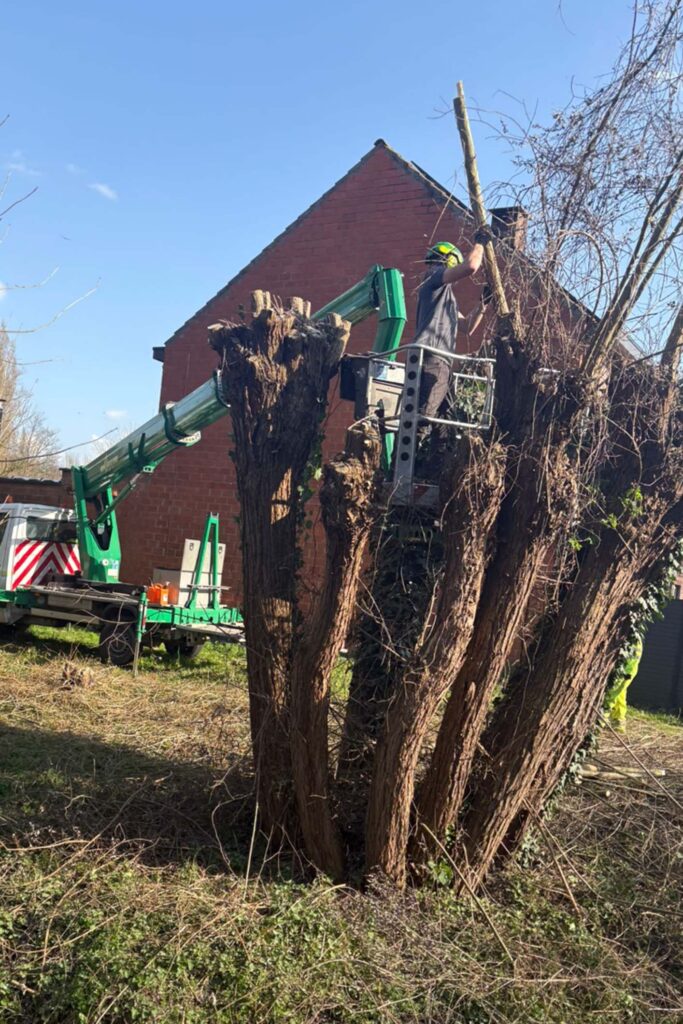
Tree pollarding involves cutting back the upper branches to a fixed framework of main stems, called pollard points or “pollard heads”.
Unlike tree topping, which leaves large, damaging wounds, pollarding:
Once established, pollarding becomes a recurring management cycle typically every 1–5 years, depending on species, growth rate, and location.
Common Pollarded Species in Bolton
We offer pollarding for the following trees.
Tree pollarding slows tree growth over the years. Tree pollarding leads to a dense rapid growth with weaker stems compared to the original ones. This means that the trees will need periodic pruning to prevent them from snapping out in the event of strong winds.
Pollarding is particularly effective for species that respond well to structured regrowth, including:
Pollarding provides a practical, long-term solution for size control in Bolton, particularly along rivers, canals, and urban streets where height and spread restrictions are necessary.
Pollarding is suitable when:
Bolton’s elevated and exposed areas, such as Bradshaw Brow, Winter Hey Lane, and elevated sections near Westhoughton, experience significant wind exposure, increasing the risk of limb failure in tall trees. Riverside sites near the Manchester, Bolton & Bury Canal, Moses Gate, and wet parklands like Leverhulme Park can accelerate growth, necessitating structural management.
Pollarding reduces canopy mass by 20–35%, lowering wind loading and structural strain. However, it is a commitment. Once started, pollarding must continue on a regular cycle to maintain structural integrity and predictability.
Crown Reduction | Pollarding |
|---|---|
Reduces canopy size while maintaining natural shape | Removes upper growth entirely to fixed points |
Suitable for occasional management | Creates compact, knuckled regrowth |
Typically reduces height/spread by 15–30% | Requires ongoing repeat pruning |
If you want strict height control in confined spaces, pollarding is more appropriate. For maintaining natural form, crown reduction may be preferable.
Pollarding affects the long-term structure of a tree, so careful planning is essential.
We inspect:
Around 25–30% of trees assessed are better suited to crown reduction rather than pollarding.
We determine cut points based on:
Correct positioning ensures regrowth emerges from stable knuckles,rather than weak epicormic shoots, which are prone to failure.
Using LOLER-inspected climbing harness systems,and MEWPs where needed, we:
All equipment is professionally maintained to manufacturer standards.
Branches are chipped or removed according to client requirements.We recycle 100% of green waste,promoting sustainable management.
Pollarded trees require re-cutting every 1–5 years. Fast-growing species, such as willows near wet areas like Moses Gate or the canal, may require more frequent attention. We provide a maintenance schedule to ensure regrowth remains controlled.
Before: Rapid lateral growth over canal footpath. Leaning toward moorings.
Action: Established pollard points at 4.5m; reduced canopy mass by 35%.
After: Compact framework maintained; predictable regrowth; pathway clear.
Before: Mature London planes interfering with street lighting and pedestrian sightlines.
Action: Implemented pollard cycle at established knuckle points; controlled framework maintained.
After: Uniform architectural appearance restored; improved light penetration; long-term structural stability ensured.
Before: Heavy lateral growth obstructing playground and paths.
Action: Pollarding of upper growth to maintain canopy mass and prevent limb failure.
After: Play area accessible; trees structurally balanced; ongoing maintenance plan provided.
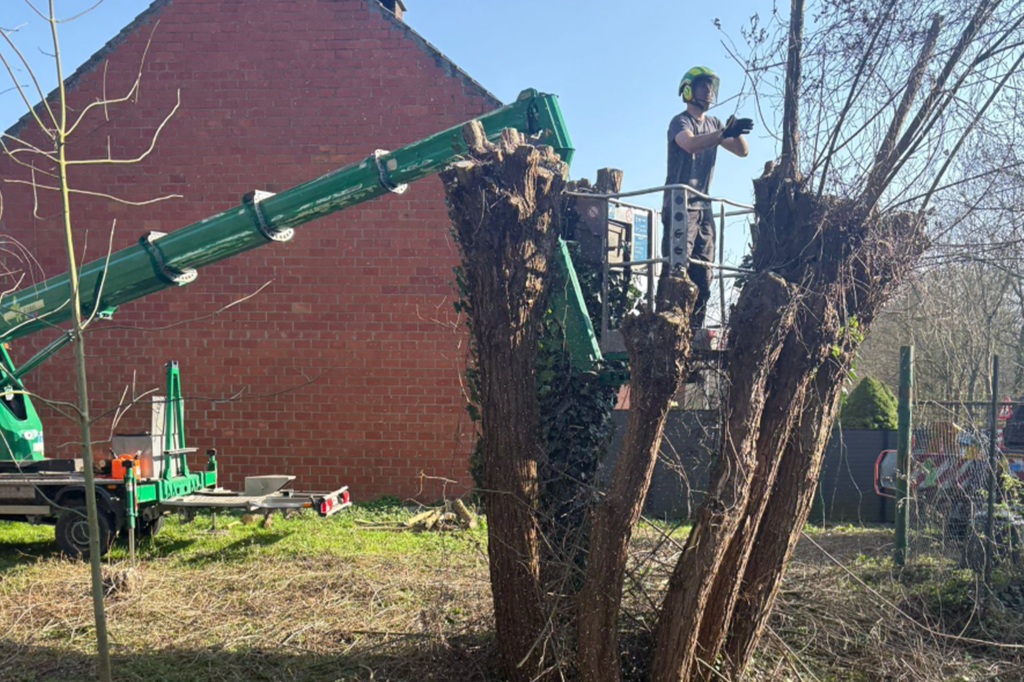
Strict canopy management required due to confined spaces and traffic.
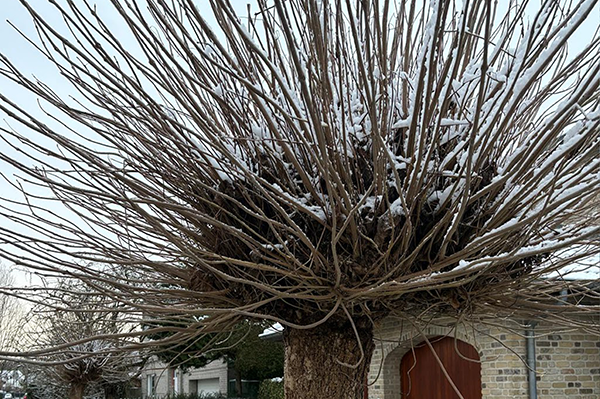
Wet soils promote rapid regrowth; pollarding prevents excessive weight and leaning.
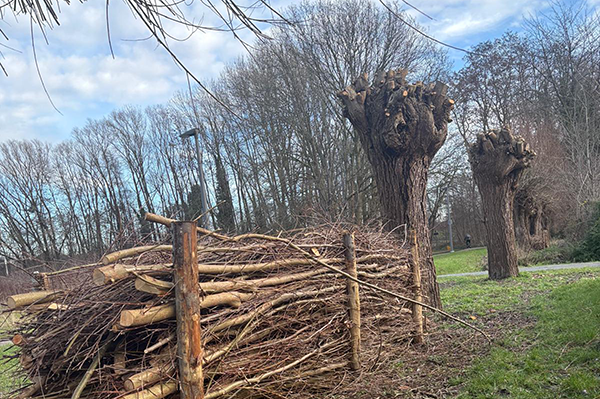
Size control ensures public safety while maintaining aesthetics.
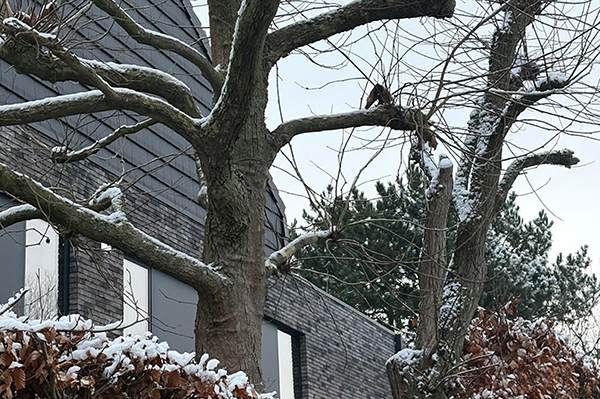
Wind load management reduces risk of structural failure.
Before pollarding, we verify:
We comply with:
Pollarding balances tree health, public safety, and environmental responsibility.
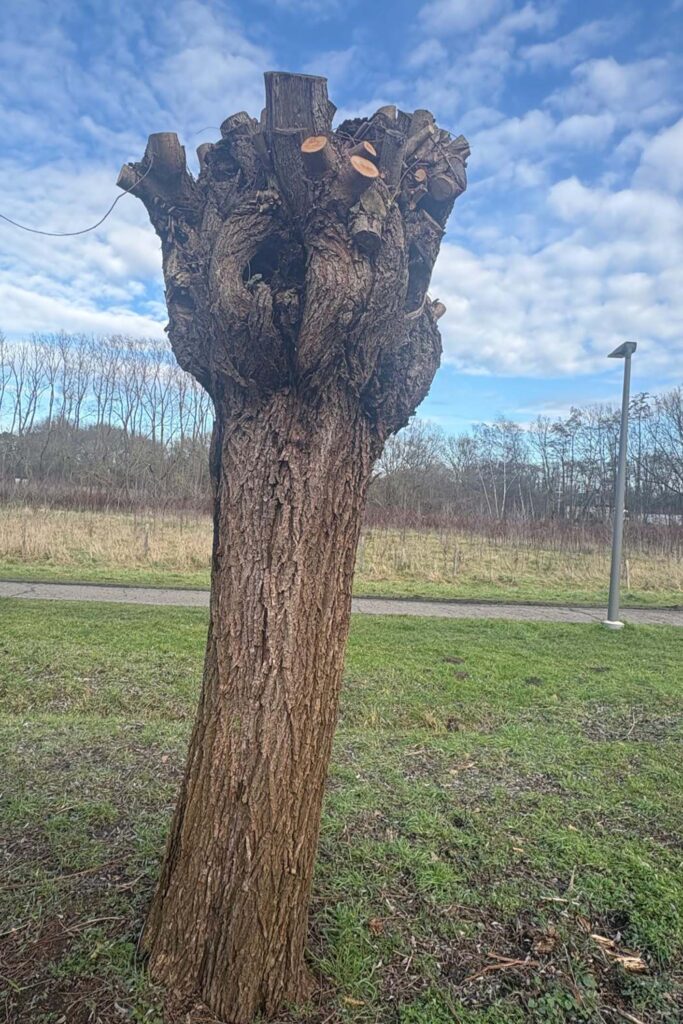
Timing is critical for tree health:
Species-specific timing is always assessed before scheduling work.
Pricing depends on:
We provide transparent written quotations after site inspections — no hidden costs.
Not when performed by professionals. Poorly executed cuts can weaken trees, emphasizing the need for experienced arborists.
Typically every 1–5 years, depending on species and growth rate.
No. Some species, especially those with weak epicormic growth, are unsuitable.
Yes. Reducing canopy mass decreases wind resistance and lowers structural stress.
Possibly. Trees in conservation areas or under TPO require consent; we manage this process for you.
If your trees require structured size control and long-term canopy management, contact our team today.
We will:
📞 Call now to arrange a site visit and free consultation with Bolton’s trusted arborists.
Trusted tree surgeons in Bolton offering fully insured services for homes and businesses, including tree removal, pruning, crown reduction, stump grinding, hedge cutting, and emergency work.
Monday – Saturday:
8:00 AM – 6:00 PM
Sunday: Closed
Emergency Services:
24/7