
Safe and efficient tree removal for dead or unwanted trees, using controlled felling and sectional dismantling methods tailored to your site.
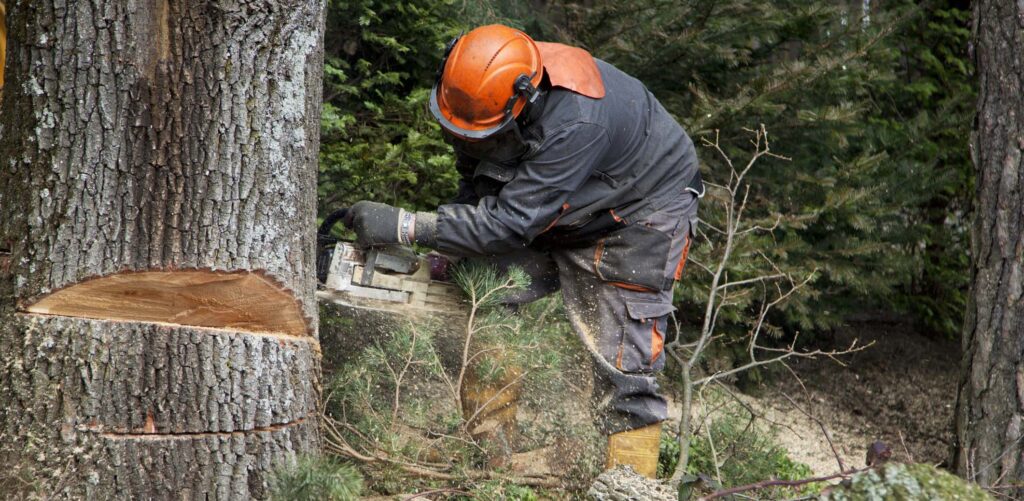
When a tree in Bolton grows too large for its location, develops structural issues, or poses a safety risk, professional tree felling and dismantling provides a controlled, responsible solution. Mature trees are far more than wooden poles — they contain significant weight, internal tension, and unpredictable movement. One wrong cut can cause twisting, splitting, or sudden failure. That’s why all tree felling, dismantling, and removal should be carried out by qualified, insured arborists using correct equipment, methodical planning, and adherence to BS 3998:2010 – Recommendations for Tree Work.
Our team provides expert tree felling, sectional dismantling, and complete tree removal across Bolton and Greater Manchester, covering suburbs such as Horwich, Farnworth, Westhoughton, Little Lever, Kearsley, Blackrod, Bromley Cross, Ainsworth, Atherton, Leigh, Darcy Lever, Swinton, Worsley, and surrounding areas. Every project is carried out with full public liability insurance, risk assessment, and safety-first procedures, while respecting local ecology and property.
Although often grouped together, these are three distinct arboricultural approaches:
Directional felling involves cutting a tree at its base and guiding it safely to the ground in a controlled direction. This method requires 100% clear drop zone, equal to or exceeding the tree’s height.
In open areas around Rivington Terraced Gardens, Middlebrook, or farmed land near Lostock, straight felling is often possible. However, most residential gardens in Bolton — for example along Bradshaw Brow, Chorley Road, or Church Street — are tightly confined, requiring sectional dismantling instead.
Select a time to cut the tree when weather conditions are favourable. Avoid cutting during strong winds, rain, or when the ground is slippery if possible. A calm, dry day is ideal.
Plan a clear escape route that’s opposite to the direction of the falling tree. This route should be free from obstacles and should allow you to move quickly and safely.
Measure and mark the point where you want to make the notch cut. The notch cut is a V-shaped cut that helps guide the tree’s fall.
Take into account any branches or obstacles that may interfere with the tree’s fall. You may need to remove or trim these before making your cuts.
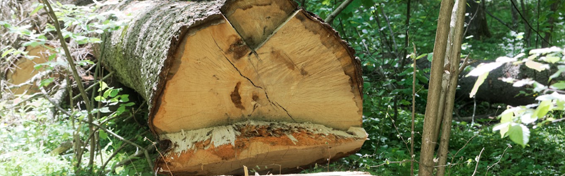
The first cut you’ll make is the undercut, also known as the notch cut. It’s a horizontal cut made on the side of the tree facing the direction you want it to fall. The notch should be about one-third of the way through the tree trunk. Ensure the bottom of the notch is slightly above the point where you marked for the final cut.

The back cut is made on the opposite side of the notch cut. It should be slightly above the bottom of the notch cut and slightly behind it. This cut should be horizontal and parallel to the ground.

The felling cut is the final cut that will cause the tree to fall. It should be made slightly above the horizontal back cut and should leave a small “hinge” of uncut wood. This hinge will guide the tree’s fall.

Be cautious of the chainsaw’s kickback. Kickback occurs when the chainsaw’s nose or tip strikes an object. Keep the chainsaw’s tip away from the tree as you cut, and be prepared for any sudden movements.
Approximately 70–80% of domestic tree removals in Bolton require sectional dismantling due to proximity to houses, power lines, or roads.
This method involves:
In suburbs like Horwich, Blackrod, or Little Hulton, sectional dismantling ensures that property and vehicles remain undamaged, even for large, unstable trees.
Complete removal combines:
The site is then ready for landscaping, paving, or development.
Trees are valuable assets, and we always explore retention through pruning first. About 60% of inspected trees can be maintained safely without removal.
Tree felling becomes necessary when:
Bolton experiences exposure from prevailing westerly winds, particularly along Bradshaw Brow, Winter Hey Lane, and elevated areas near Westhoughton, making trees prone to asymmetrical loading. Riverside zones near the Manchester, Bolton & Bury Canal, and wet grounds around Moses Gate Country Park can reduce root anchorage, especially after heavy rainfall. Early assessment prevents emergency situations later.
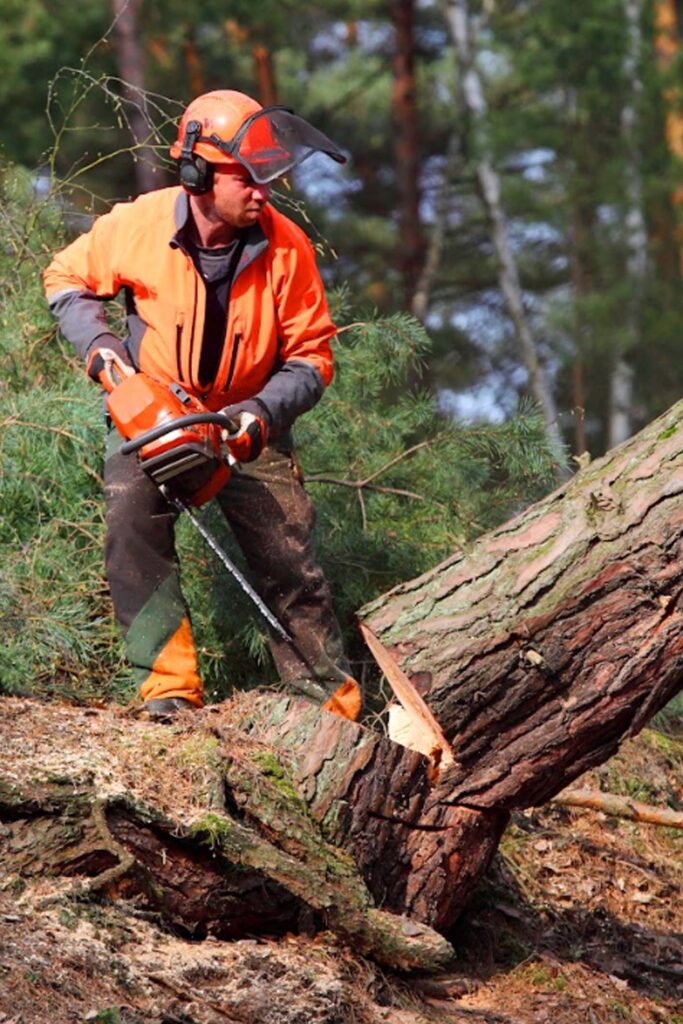
Safe removal follows a structured, methodical process.
We inspect:
TPOs or Conservation Areas are checked, particularly in historic districts like Westhoughton Conservation Area or near listed structures in Swinton or Lostock.
We determine:
Careful planning significantly reduces site risk.
Climbers use:
Each branch section is secured before cutting, and weight is lowered gradually, particularly for heavy lateral limbs, common on sycamores and horse chestnuts in the area.
After crown removal:
Sections are cut with attention to compression and tension forces, ensuring no sudden collapse.
Stumps are typically ground 200–300mm below ground level to:
Before: Large oak on Church Street leaning toward a garage after Storm Arwen. Visible basal decay.
Action: Sectional dismantling with double-rope climbing; branches limited to 75kg per lift.
After: Tree removed in one day; garage untouched; stump ground; debris cleared.
Before: Uprooted sycamore near Bury New Road after 48 hours of heavy rain; root plate lifted 350mm.
Action: Rigged sectional removal; weight removed gradually to prevent collapse.
After: Driveway cleared same afternoon; stump ground; timber recycled.
Before: Split limb from Storm Eunice over playground in Queens Park.
Action: Controlled removal using MEWP; crown reduced by 25%.
After: Playground reopened in 24 hours; site safe; debris chipped and removed.
Professional tree felling in Bolton requires specialist tools:
All equipment is inspected in line with LOLER and PUWER regulations, and we comply with the Health & Safety at Work Act.
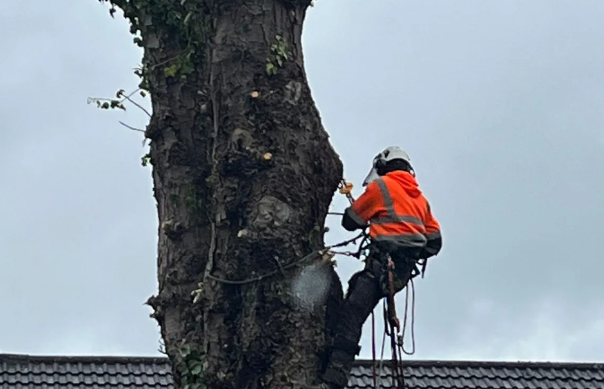
Sectional dismantling is standard due to confined access.
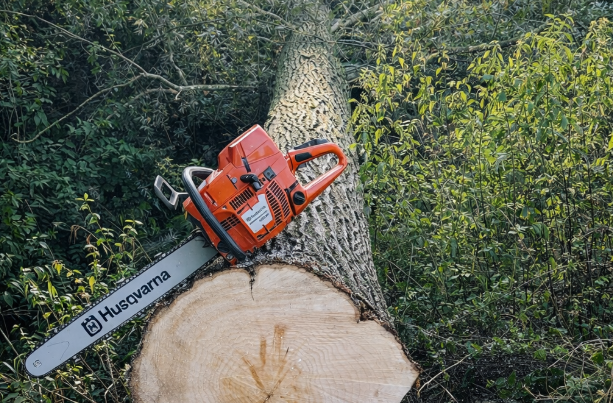
Directional felling may be possible with assessment of wind and soil.
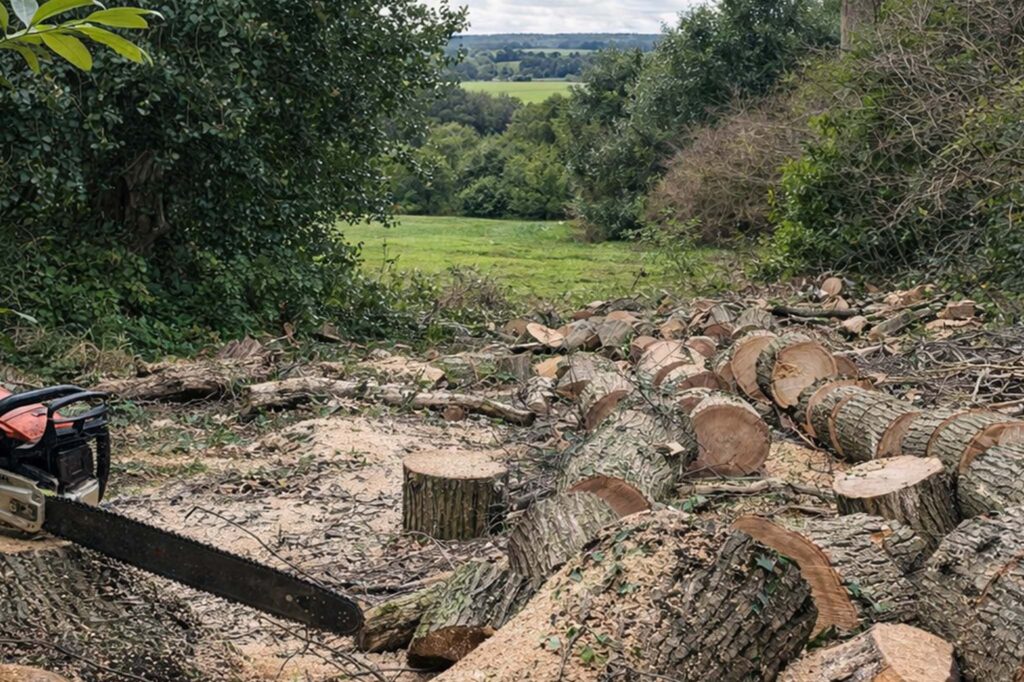
Soft ground and exposed roots require careful evaluation.
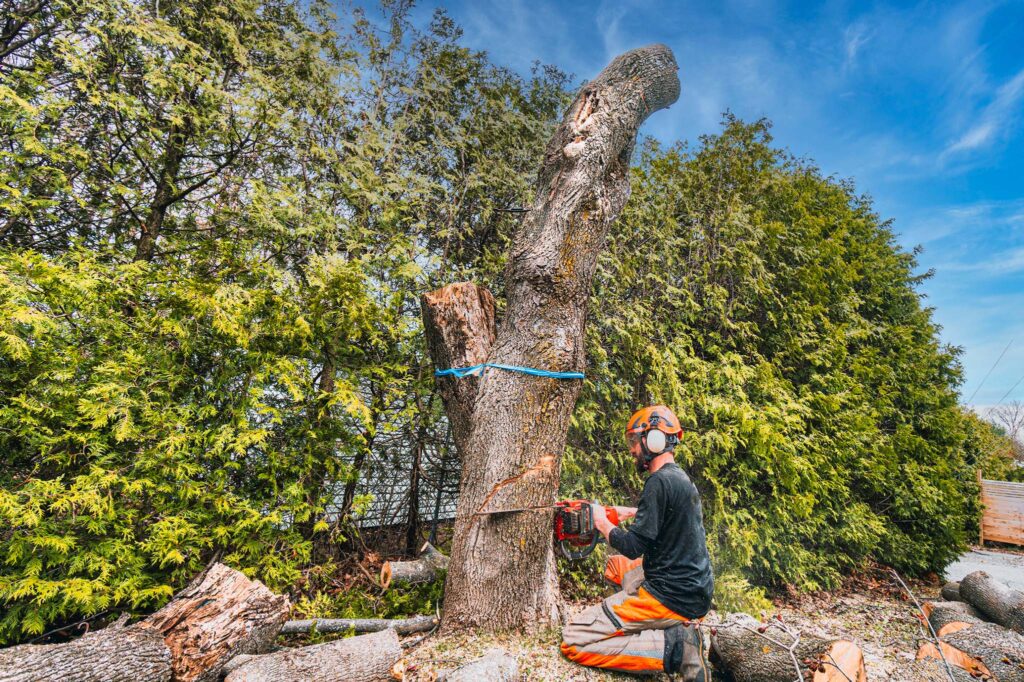
Wind load and asymmetrical canopy influence felling strategy.
Local knowledge ensures safe, efficient removal.
Ninety percent of tree felling accidents happen within 15 seconds of the tree beginning to move, and within 5ft of the trunk. This is called the “90-15-5 rule.” Don’t become a victim of this rule. Once the felling direction is determined, plan and clear the escape route.
Yes, for trees under TPOs or Conservation Areas. We handle applications where needed.
Domestic removals: half a day to a full day. Complex jobs may take longer.
Yes. Controlled rigging and MEWP ensure safety. Over 75% of removals involve confined spaces.
Optional; prevents regrowth and removes trip hazards.
Yes, unless logs are requested to be retained.
For safe, professional tree felling in Bolton, contact our team for a site visit.
We’ll:
📞 Call today for a free, no-obligation quote from trusted local tree surgeons.
Trusted tree surgeons in Bolton offering fully insured services for homes and businesses, including tree removal, pruning, crown reduction, stump grinding, hedge cutting, and emergency work.
Monday – Saturday:
8:00 AM – 6:00 PM
Sunday: Closed
Emergency Services:
24/7